Pages

Thursday, February 15, 2007

Flashback to Szóda's Youth


The following is a blog entry from back when I was posting on Yahoo 360.


My dog eats poo. This upsets me a great deal. I sometimes console myself with the fact that she’s picky about it. Here on the sidewalks of Budapest she has a regular smorgasbord to choose from, and only rarely does she find the variety of poo she enjoys. But when she does…

If I don’t watch her, she’ll dive right in. It makes me unreasonably angry. And she knows that. She waits for the moments when I’m distracted. When I catch her in the act she gets all meek, ears pinned down and the puppy-dog eyes. But my anger often overwhelms me, and I scold her in horribly broken Hungarian.

I’ve read about it online, and there doesn’t seem to be anything horribly wrong with it… except for the fact that my dog puts feces in her mouth. I don’t think I can ever accept that.

Of course that’s not the only trouble spot on walks here in the city, but I can’t blame Szóda for this next one. The Hungarian population has to shoulder the responsibility for this. See, here in Budapest the residents seem to think littering is something of a competition. There are different categories within the sport of littering, just like ice-skating. Some compete for sheer volume, lugging entire boxes of trash out into the street and dumping these boxes out across the sidewalk. Others compete for style points. I found (actually Szóda found this one) a traditional Hungarian open-faced sandwich, rustic white bread spread with lard and topped with thinly sliced red onions, placed neatly on top of a fire hydrant. Perhaps this person thought it less like littering if the sandwich doesn’t touch the ground. I’m comfortable saying that it is not only littering, it is a worse form of littering because the offending sandwich is closer to my face. Still others compete in the covert-littering event, finding little corners and holes to tuck their trash in. This trash remains almost out of sight, but not to a dog. And there is the problem.

Aside from knocking the quality of life down a notch, these people are making my dog-walks a pain in the ass. I am constantly yanking the leash in order to keep Szóda’s face away from trash and poo. The city cleans the tourist areas everyday, but my street gets cleaned only once a week. And that cleaning isn’t cutting it. I try to pick up what I can, but there is an issue of hygiene to be considered in some/most cases.

So, for Szóda the walks have become a time when she’s thinking, “I bet I could eat that. I bet I could eat that. I bet I could eat that. I bet I could eat that. I bet I could eat that.” while I scold her and pull her away from all she would eat. I hope she doesn’t hold it against me.

Saturday, February 10, 2007

Geeks


Those who know me would agree, but those who are less familiar should know that I am a geek.

I don’t mean it in that snarky iGeneration sense; I’m not ultra-net savvy, or up-to-date on one specific yet esoteric music scene. It’s nothing like that.

I’m a geek in all the un-glorious traditional ways: I used to play D&D (and would still if I could find players). I’ve seen live shows from the likes of They Might Be Giants, Depeche Mode, and a Blues Brothers cover group. In high school, I was involved in the theater, the choir, the orchestra, and a start-up improve troupe. In college, I liked classes, hated frats, delivered pizza, and ran security at the student union (where I also facilitated the orientation training for new student employees). And through it all I’ve been reading sci-fi and fantasy or watching X-Files, Star Trek’s various incarnations, and now BSG (love me some BSG).

So, with my geek-credential all in order, I feel qualified to say the following:

Geek culture in Hungary is identical to the geek culture I am familiar with in the States. They read Phillip K. Dick and Kurt Vonnegut. They play RPGs in basement bookstores called “Dark Rider Books” (my translation). They sit quietly in rowdy bars, discussing chess strategy---

Actually, let me explain that last one. Kazi (Dora’s cousin) and Kati recently had a baby boy. They named him Alfred. He was born five weeks early, but there were no serious problems. He is completely healthy. So, to celebrate we all went out for a drink. Kazi’s friends make up a raucous crowd, and that night was no exception. To quote David Brent, “El vino did flow.” What struck me as out of place were these five guys there at the bar. They not affiliated with the festivities. They were sitting around a chess board. They were not playing chess, however. They were setting the pieces up in little chess puzzles, working from a set of printed out notes, and arguing the merits and shortcomings of certain moves in each scenario.

While watching these guys, I was flipping through a local sci-fi/fantasy magazine with illustrations, short stories, poetry, and a serialized graphic novel. And that’s when I saw it. In this country, where the concept of cool is far removed from what we Americans consider to be cool, the geek culture is indistinguishable.

Is that as interesting to any of you as it is to me?

Saturday, February 03, 2007

How much would you pay to go into debt?


It looks like Dora and I are about to buy an apartment. We’re very excited about this. We like the building, the location, and most of all, we like the apartment itself. We’ve made an offer, and if the loan goes through we’ll be living in a recently renovated building that was constructed in 1900. Our apartment would be a two bedroom on the second floor (In the US you’d call it the third floor) in very central part of town.

I’m excited to stop paying rent, which brings me to the subject of today’s post:

Hungary’s culture of savings versus America’s culture of debt.

In a country full of financial paradox: where you must have a bank account in order to hold a job, yet the banks charge predatory fees; where the government recently raised taxes, but cut government services; where if you want to run a small business, you have to pay $500 in monthly fees, regardless of how much money you make – in a country like this, people have learned to view the exchange of money as an opportunity to “screw” or “be screwed.”

The result is that Hungarians avoid debt or borrowing of any kind, because it looks so much like an opportunity to be screwed.

For the most part:

Hungarians don’t rent apartments. They live with their parents until they can buy.

Hungarians don’t purchase anything in installments. They will drive their old beater until they have enough to buy a new car.

Hungarians don’t carry credit debt. Allowing yourself to be charged interest doesn’t make sense to a Hungarian.

Things are changing slowly. Home loans are picking up steam, and credit card offers are becoming more visible, but it is so different from the consumer driven culture I knew back in the States. That is: If you want it, you can have it now (strings attached).

Distrust is not always a good quality, but I can’t help but admire the Hungarian attitude of economic distrust. No matter the country, people do questionable things in the name of money; people in banking and government are no exception.

In America, our distrust of government has successfully kept taxes relatively low, but we continue to throw interest payments at banks like they’ve done something tremendous to deserve it.

I never liked credit card debt, but it felt like the natural state of being in the States. Which makes me wonder about the whole consumer confidence rating. They make such a big deal out of that number, but if half of the people “spending” are simply going further into debt, then that’s not consumer confidence; it’s lender confidence.

I think maybe Americans could use a little of the Hungarian distrust. People in the States seem to believe that $25,000 of credit is a favor, but Hungarians would see that as a trap. Maybe the adolescent free-market economy over here has something to teach its more mature role-model over there.

Friday, February 02, 2007

Feeling Low


I’ve spent my birthday and most of Groundhog’s Day sick. Horrible sick, like I can’t get out of bed. Walking the dog takes everything out of me. But I’m not writing for mercy, I have a question.

Earlier this week, Dora had the same thing I have now. She left work early one day, and missed the next workday. That’s about the same amount of time I’ve missed, but there’s something about the way she suffered – well, she didn’t really suffer. That's just it. She was uncomfortable and lacked energy. She had a headache and a cough, same symptoms as me. But she didn’t seem to be in nearly as much pain as me.

I know I’m a huge baby when it comes to being sick, but Dora was telling me that in general, men suffer more then women when sick. I guess it’s an old stereotype I didn’t know about.

My question to readers is: In your experience, compared to women, do men become more of the martyr when they feel ill? And if so, why do you think that is?

Wednesday, January 24, 2007

The Warmer Winds of Change


I’m not too concerned about where people stand on climate change. We’re at a point where people agree that’s it’s happening, but for some there is debate on the role humans play.

Fine.

Then let’s define the debate this way:

One side says we have to cut our burning of fossil fuels to stem climate change. This side includes the chief executives of 10 major corporations (citation from FOX News), a UN panel of 2,500 scientists (citation from Reuters), and the more than 160 nations that have ratified or at least accepted the Kyoto Protocol (see list).

The other side says the jury is still out on the role humans play in climate change. The science of climate analysis is anything but precise, and there have been countless shifts in the climate over Earth’s long history. There are scientists out there with evidence that shows how these and other ideas disprove the claims of environmentalists worried about climate change (look at this scientific looking website).

To some, the latter camp is populated by crackpots and schemers. To others, the former camp is composed of alarmists and conspirators. No matter where you situate yourself, the topic is hot. It is on the public’s mind, and I was wondering about the role it would play in the speeches last night.

Despite nearly overwhelming public concern on the issue, President Bush didn’t make much of climate change in his State of the Union Address, apparently siding himself with the latter camp. Indeed he is a hero to those who claim the concerns over climate change are exaggerated, as he is one of the only leaders from a developed nation to reject the Kyoto Protocol. (I will accept that this decision may be influenced more by the President’s belief in corporate freedom than his denial of the overwhelming scientific evidence. And now don’t take this to mean I’m happy with those who signed on to Kyoto. Europe can’t figure out how to meet the standards, making the whole protocol next-to-meaningless.)

Nevertheless, something in the speech did touch on the issue. The President would like America to become less dependent on foreign oil. While one of the methods he suggested in the address was an increase in domestic production, the President did acknowledge that the US needs to find ways to consume less. Sure, there's ethanol and renewable sources, but even W knows we have do go on a diet. He didn't tell us how to cut down, however. I'm not sure he wants to go into those kinds of details.

He did get me thinking, however.

It is transportation, specifically air and auto transit, that accounts for the vast majority of the world's consumption of oil. Europe can’t figure out how to deal with the issue, and America’s size combined with our love affair with the automobile makes us just as hopeless. But if we had to cut transit consumption, how could we do it?

My answer is trains.

Here’s my thinking. I hate traveling by plane, and I don’t care for driving. I love trains. Can’t say why, but I think trains are great. The rise of short-haul airlines has ruined the train industry here in Europe. It also has led to a spike in airline emissions. Commuter rails in Central and Eastern Europe are dying off because people can afford cars now. The result has been a hike in ticket prices. My thinking is countries need to do the opposite.

Developed nations need to invest in suburban and commuter rail lines. They need to make rail more comfortable and competitive. Trains should be made significantly cheaper than air travel. The cost of gas, tolls, and time should be comparable to the cost of a monthly train pass. There should be internet access and a gym-car on commuter lines. The cafes shouldn’t price gouge. And yes, I think this should all be made possible with tax dollars.

My question for readers is this: am I letting my love of trains cloud my judgment, or does this sound like part of a solution?

Tuesday, January 23, 2007

Art Here and There


Not too long ago, I saw a play here in Budapest. The show was in Hungarian. It was an adaptation of the Danish film, The Celebration. Going in, I was unsure if I would be able to enjoy the show, considering my very limited Hungarian. I was pleasantly surprised though. Aside from a few monologues that I needed Dora to explain, overall the play came together for me. The show was stunningly powerful, but that’s not what I want to address here.

It was a Tuesday night in a city of just two over million people (about the size of Houston). The show was a challenging piece about an upper-class family confronting the father’s history of sexually and mentally abusing his children. The theater was packed. There were chairs set up in the aisle for overflow, and all of those chairs held audience members. Not everybody loved the show. The shocking conclusion was a bit too much for Andras, but he and I still managed to have a nice talk about the effect the scene had on the show as a whole.

A few days later Dora, Andras, Agnes, and I visited the National Museum for a retrospective on Hungarian painters. The exhibit was impressive, but once again, what struck me was the amount of visitors. We waited in line for tickets, and once inside, every room was full of museum goers. Meanwhile, across town there was a Van Gogh exhibit that had shoulder-to-shoulder crowds no matter the time of day you visited.

The Opera is always full – or close to it. The city has a new national theater with an auditorium, an orchestra hall and a studio space. What I’m getting at here is Budapest’s fine arts are thriving in a way that surprises me. I’m not surprised that the people here are art lovers; I’m surprised at how much fine art such a small nation can support.

It is particularly impressive when you consider how new the concepts of philanthropy and patronage are in post-Soviet Hungary. Seventeen years after the regime change, and people are still weary about “giving to the community.” The retrospective at the National Museum was filled with paintings on loan from the collection of a man named Kovács Gábor. The Hungarians at the exhibit kept commenting about that, like it was odd that a man would lend his paintings to a museum just like that.

So, how do the Hungarians do it? Well, I think the answer is a lot of government funding, which may be at risk. The economy is not exactly tip-top right now, and painful budget cuts are already being made. The interesting thing so far has been the way cuts have been implemented. Aside from healthcare, no one area has been targeted. Most cuts have been across the board. This raises howls from everybody, because everybody losses a little, and they’d rather lose nothing at all. However, what I’m used to as an American is targeted cuts – schools losing their music programs, museums losing funding, and grants being reduced.

I can’t be sure, but I think it says something about the difference in the way Hungarians and Americans see the fine arts. The Hungarian middle class can, and does attend theater events, largely because the state keeps tickets affordable. Young families are able to take their kids to the Opera. The Hungarians seem to understand fine art as something that belongs to all Hungarians. Whereas Americans deem fine art as something the wealthy allow the middle class to enjoy. I’m not saying the US system doesn’t work. There are many generous people who fund the arts in the States, but the system does have its drawbacks. Especially when you consider labor-intensive art forms – like ballet, musicals, theater, cinema, and so on – these productions have to become businesses even when they do enjoy patronage. Broadway’s new method of scaling the house is a sign of this.

The result of business-minded art not only prices out some of the middle class, it also discourages producers from taking on projects that push the threshold of their respective arts forms. I can’t help but wonder how Stephen Sondheim’s work would fair on today’s Broadway of “Mary Poppins” and “Legally Blonde.” And it’s already been made clear that edgy dramas like “The Celebration” don’t stand much of a chance. That show ran for just two-weeks on Broadway before they had to strike the set. If the outrageous rent on the theaters were subsidized, and the savings were passed on to the public I think we’d see American writers and composers producing more ambitious and interesting work.

Tuesday, January 16, 2007

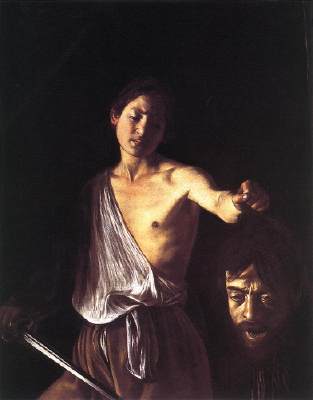
Losing my head


“The decapitation appeared inadvertent…”

Why are those words strung together in my morning news?

That’s it. I’m done being reasonable about this thing. I’m through with weighing the historical context, considering regional stability, giving credence to claims that the UN sanctions were failing, and hoping for a blossoming democracy. I tried. I did. I know smart people who supported this thing. I can name intelligent individuals who argued convincingly in the name of this war. And while I always made my opposition clear, I did my damnedest to listen to those people. I weighed what they had to say, and for a time I even allowed some of my views to sway closer to the center. “Yes, sure, I will concede that a strong ally in the region would be in US interests.” “When you put it that way, I can see how a small force could be considered a tactical advantage.”

But I was never convinced, and now…

“The decapitation appeared inadvertent…”? Say what you will about the death penalty (a barbaric remnant of a time when governance meant vengeance was in the public interest), but most people would be hard pressed to defend an accidental beheading during an execution.

Oops, I dinged your car door.

Sorry, I spilled some wine on the rug.

Those actions can be described as accidental, but when a living person’s head is pulled from their body, inadvertent or not, primitive and thoughtless forces were at play. There are plenty of beheadings in history. The Bible chronicles some of the best, but none of them are followed by, “Oh, my bad.”

So we ousted a brutal dictator, and these are the people we put in his place. Great goddamned job, Georgie. Brav-fucking-o. Yeah, that’s right; I’m giving up my civil, restrained, non-vulgar voice on this issue. Screw that. I will no longer abide the war-supporters' insistence on levelheaded discourse (levelheaded, ha, didn’t even mean for that to slip out). We’ve blown the goat on this one, ladies and gentlemen. It’s officially fuck-all, and those who disagree can suck my fucking cock.

Wednesday, December 20, 2006

Drugs over here and over there


So I just listened to an NPR report on organized crime’s move into the marijuana industry. The report said the drug generates $35 billion annually in the US, making it the nation’s number one cash crop. The story went on to detail federal busts in suburban California communities, and illustrated with little room for argument how those busts point to organized crime. Before I get to comparing the US’s view of marijuana to Hungary’s view of the drug, I want to say something more general.

I don’t like organized crime. I think people who make a living off the black market do harm to the rest of us. This is a view I didn’t have when I lived in the States, but since moving to Hungary where the black market is doing visible harm to honest people who work harder then they should considering the wages they make, I’ve come to view organized criminals as weak-minded parasites. If there are two things I have grown disdainful of, they are organized crime and corruption. The two often go hand in hand, but right now I’m mostly concerned with the dickless goons who think they’ve beat the system because they control the liquor market, the casinos, the high-end dance clubs, and the strip clubs without paying a penny in taxes. Sounds like a sweet gig, but they’re dragging down the rest of the country. There are a few people who see the damage being done, but whether it is through threats of violence or through their connections to corrupt officials, the small-minded goons in charge of the whole system have secured their strangle-hold and won’t be happy until Hungary has no more money left to steal.

That said, I think it would be in America’s best interest to keep the marijuana market out of the hands of organized criminals. And considering the country’s understanding/acceptance of the drug, I think the only way to do that is decriminalization. The NPR report features a police officer pointing out that the busts being made did not involve the hobby home growers or the groovy gardeners. These bust involved criminal rings looking to cash in on a widely accepted, yet illegal commodity. The criminals in California are taking advantage of the drug’s status as a risky investment. The state of California has all but agreed to look the other way, but the Federal government is riding around on their high horse and kicking in pot-growers doors. The small-time growers can’t afford the risk anymore, but the demand persists. Who will supply the market? Well, it will be people who can afford to invest in an operation that uses economy of scale to make up for the occasional loss. It will be people who can hire someone willing to go to jail for a while. It will be people accustomed to flagrantly breaking the law. The Federal government is all but handing them the market.

Marijuana is easy to grow. It is called weed for a reason. It should be dirt cheap. Even the good stuff can be grown on a small scale with minimal investment. If growing a plant or two for personal use means jail time, however, the value goes up and the criminals move into the market. So, attempting to control the supply with harsh law enforcement not only fails to achieve its goal, it fills the pockets of the worst kinds of people.

So, can America do anything about the demand side of the equation? In short, the answer is no. I’m over here in Hungary where the Soviets did a bang up job brainwashing the population. If you ask anyone over forty about marijuana, they will tell you that the stuff will kill you, give you herpes, make you impotent, and put a curse on your family line for generations to come. Of course that same person will also tell you that being gay is a disease you can catch by watching too much Western television (someone actually told me that). America, while it doesn’t say nice things about the drug, does allow a healthy exchange of ideas to take place among its citizens. If you like pot, you don’t feel bad telling your best friend about it. When the Soviets were here in Hungary, however, even if you thought marijuana was harmless, hell if you were going to tell your friend at work. He’d get a promotion for reporting you. In the States we don’t have that kind of paranoia to deal with, and over time people have come to realize that pot isn’t all that bad. Sure there are a number of drawbacks, but overall the harm is nowhere near that of harder drugs. It has gotten to a point where people are okay with marijuana. They don’t want to see it sold in gas stations, but if someone keeps a little wooden box stocked with rolling papers and an ounce or two, no harm no foul. Without an expensive public “education” campaign aimed at un-learning America’s three to four decades of experience with the dreaded marijuana, there seems to be few choices other than decriminalization. And so my question to you, dear reader, is: Does that sound like, totally, really like the most awesome plan ever, or am I just soooo stoned?