Pages

Wednesday, December 13, 2006

Dog debate

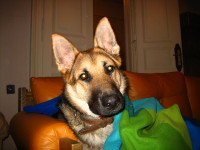
The correct word order, I finally decide, would be canine menstrual blood not menstrual canine blood, but since it’s come up, let me take this opportunity to say that this is a defining moment for me in that I never could have predicted my life taking a path that would lead to a debate over the proper adjective order necessary to describe the rust-colored stain left on the day bed by my young dog Szóda. It would be trite to point out that my move from Midwestern America to Central Europe came as a surprise to even myself. Perhaps equally so to say that I never saw teaching English rhetoric to Hungarians as a source of income I would one day tap. What makes this moment poignant, however - what highlights the disparity between what I am and what I was before my arrival in Hungary, is a memory of the famed host of “The Price is Right”, the peerless Bob Barker. For those in the know, you’ll remember the public service announcement Mr. Barker made as “The Price is Right” came to a close. The credits would start rolling. The family and friends of the Showcase Showdown winner would be storming the stage. The Barbie doll presenters would be comforting the contestant who came in second place, and then Bob would say it: “Remember folks, help to control the pet population. Spay and neuter your pets.” For those of you who didn’t know, this was how a very popular American game show would come to a close nearly everyday at 11:00am Central Standard Time.

Bob Barker had me convinced that, if you had a dog or cat, the humane thing to do was to take away its ability to procreate. I accepted his word as gospel. Why would that man lie to America?

Well, I realize he wasn’t lying. He was simply using the soapbox he’d helped to construct in an effort to convey a message he believed in. The man believes the pet population is out of control, and spay/neuter clinics are the answer to that problem.

Now that I live in Hungary, however, I’ve come to question Bob’s belief. Most people here do not clip off their pets’ reproductive organs. It is simply not common practice. Throughout the year I meet many dog-walkers in the street who ask me if Szóda is a girl or a boy. Some are worried about two boy dogs getting into a fight, but many are worried because their female dog is in heat. You don’t want to allow a male dog’s nose too close to a menstruating female’s behind. Just trust me on that.

I will admit, getting Szóda fixed would make things a bit easier. I can’t let her run around willy-nilly when she’s in heat, not unless I want puppies. Beyond that, however, there isn’t much of an issue. It’s not as messy as you might think. In fact it's not messy at all. And there is no stray dog problem in Hungary, at least not as far as I can see. I’ve lived in the city and in the countryside, and I have yet to see more than one or two strays. So I am left with a question: do I take Bob Barker’s advice or do I allow Szóda to keep her ability to reproduce? Let me know what you think.

Monday, December 11, 2006

The passing of a legend


Just something brief today, something about the passing of a football legend. Ferenc Puskas was a Hungarian footballer (soccer player) who won the respect of every football fan in the world during his career. I have to admit, I didn’t know who he was before coming to Hungary. And I certainly didn’t realize his status as a national hero until he passed away. There was a national day of mourning; we’re talking black flags hung in the capitol and praise from the Prime Minister.

Now, if you understand the game and have a look at the man’s record, there’s good reason for Hungary’s adoration of Puskas. He earned his status as a legend. It’s not just the Hungarians who feel that way, as he also played with Real Madrid after defecting in ’56, a move that did not please the communists whatsoever. They branded him a traitor. Of course, Hungarians welcomed Puskas and his family back in the 80’s, showing that there are a few things more powerful then politics in this country.

So why, if I didn’t know much about the man, did I choose to write about him today? Well, it seems to me that nearly the entire world pays close attention to this game football (soccer). The passing of great players is marked by days of mourning. The issues of the Cold War are put to one side for one footballer’s desire to return to his homeland. It’s astounding how much people care about the game. And while I don’t doubt Americans have the same devotion to the sports we follow, I’m still left wondering why we don’t show much interest in this game. I’ve read a lot of theories: the rhythm of the game doesn’t jive with Americans (then how can one explain a love of both basketball and baseball?), there are too many American sports already (What? Maybe 3.5 with football, baseball, basketball, and the non-Canadian half of hockey), or a lack of talent (but with a population around 300 million and more money than… anybody else, that excuse falls short).

I think, however, that the most interesting reason behind it might be the real one. I don’t think America wants to compete on the world stage in a team sporting event. Aside from the team events at the Olympics and in track and field, we don’t like to play with others. And let’s face it, without a cold war, the Olympics and track and field are not exactly big draws anymore.

So what do you say about a country that doesn’t play well with others? I don’t know, but I thought I’d pose the question.

Friday, December 01, 2006

Like a rolling stone


I was writing to John Burns, an old friend, today. I was excusing my failed e-life: no person emails in months, no blog entries, no messenger... nothing. But in responce to his question about Hungarian politics, I just couldn't stop writing. Here's some of that message.

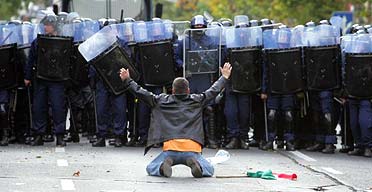
And as far as Hungarian politics is concerned... Wow, it's a lot to explain. The protests and the ensuing riots are filled with a couple hundred years of issues: loss of territory after WWI, anti-Semitism, communism vs socialism, xenophobia, police brutality, police incompetence, failed revolutions in 1848 and 1956, and more.

It's so hard for us as Americans to comprehend, the people here consider their whole history political. I've been here a while, and I'm still trying to wrap my head around all of it. Imagine an American politician invoking his party’s triumphs during the Civil War. It wouldn't happen outside a strictly academic conversation.

As a people, we Americans favor issues over context. I see it as both a blessing and a curse. I'm over here, however, and learning that most people in the world think the tendency makes Americans look stupid. Yet they acknowledge that we’re productive. They fail to understand the mechanism behind it, because divorcing themselves from their history is such an impossible concept.

Sounds like a good thing, right. But when there's been a peaceful change in regime and the nation is expected to move at the pace of the world economy, there’s a need for people to step back and look at the now – even if only for a couple of years. The Hungarians want a free-market economy, but they want to blame the government for any and all problems. They want the lower taxes of a full-fledged capitalist economy without losing the benefits that came with socialism. So the amateur politicians over here lie to the public while pushing through legislation aimed at one side or the other.

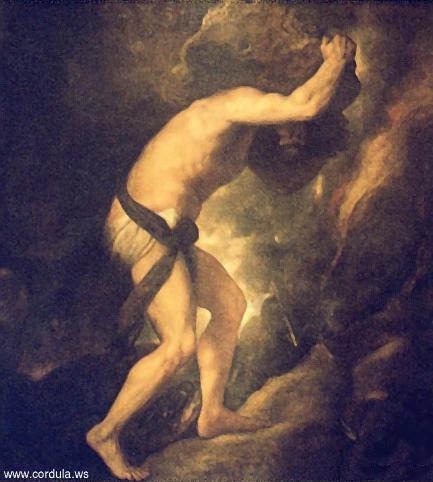
It’s a Sisyphean task if there ever was one. And in a moderately poor country full of people who enjoy revolutions, when the rock rolls back downhill… well you saw the news.

Sunday, November 05, 2006

Back for the fall


Autumn has come and nearly gone here in Hungary. There has been a flurry of events to accompany it. Unfortunately this flurry knocked me out of the blogging loop for a bit, but I’m back… with a lot to say.

I should start with the announcement of my sister’s new baby. Thomas Earl Lutz was born on the 23rd of October, 2006. Congratulations to Courtney and Terry. I’m happy to have a nephew – my first. I hope he’s a trouble-maker.

Speaking of Thomas Earl, I was in an interesting place when I got the news of his arrival. My nephew was born on the 50th anniversary of Hungary’s revolution against the Soviets, and when I got the call telling me of his birth I was in a café trying to avoid the right-wing rioters out ravaging the streets of Budapest . Odd, you might think, that members of Hungary’s political right would choose to celebrate the anniversary of such a momentous event with eruptions of violence and anti-government themed protests. Odd because the Hungarian right is traditionally tied to themes of nationalism and to the proud history of Hungary. One would assume that such a party would attempt to ring in this anniversary with all the pomp and ceremony of an independence celebration.

It would seem ridiculous to politicize this event, this event that recognizes a time when Hungarians found one voice – despite the many disparate ideals in this country – one voice that railed against the Soviet Empire strongly enough to drive the occupying troops of the Russian army, the largest standing army of the day, out of Hungary entirely. Students, workers, the military, and even several politicians all came together to stand up against the Soviet occupation, and for a short time they were triumphant.

The brutal Russian retaliation that followed served as a wake-up call to Communist thinkers in the west. People saw the unpleasantness that Moscow had, until that point, kept hidden for the most part behind the Iron Curtain. The 56 Revolution and its aftermath is often considered as one of the first major dents in the Soviet façade, and is thought by many to be a major factor in what led to the eventual collapse of Soviet rule.

I had been looking forward to being here for Hungary’s celebration of the event, but when political events took an ugly turn last month I knew the event would be tainted. (For those out of the loop, the leader of the ruling socialist party was caught on tape admitting to lies, lies that likely got him re-elected. Since then, the opposition has been protesting and calling for the Prime Minister’s resignation.) I couldn’t have predicted, however, just how tainted the anniversary’s celebration would be.

The party representing the right organized a commemorative event at the intersection of the two busiest roads in the downtown area. The metro stop at that location is called Astoria, after a hotel at the intersection. People call the intersection by the same name (great PR for the hotel). Those familiar with my life here in Budapest may recognize the location as the metro stop just outside Lili’s apartment.

Dora and I picked up Lili after she finished work. We’d received a lot of phone calls urging us to keep Lili away from Astoria. For one thing, most of Dora’s family didn’t want us adding our number to the crowd, and thereby showing a kind of support for their cause. For another thing, there was fear of violence at the event.

Of course we headed straight for Astoria.

I suppose it was the large presence of skinheads that surprised me most. I have been engaged in an ongoing debate with a fellow teacher at McDaniel. He supports the right, and when I said the party needs to marginalize radical elements (like skinheads), he got upset and told me the party wanted nothing to do with such people. He even went so far as to suggest that the socialists were the ones responsible for sending such hooligans to events sponsored by the right. When we arrived at the commemoration, however, the skinheads were mingling with other people and seemed to fit in just fine.

Now I don’t want people to think the right in Hungary is a bunch of skinheads. That’s not true at all. Families were present, old people, young businessmen, the working class, and more – all there in support of their party. The skinheads were only a fraction of the crowd, but they were there - the loud minority. Now, I do understand that they are a minority, but the party does little, if anything, to discourage their antics. In fact, the speech given by Victor Orban, the party’s charismatic leader, inspired the more radical elements to violence. He opened with some pleasantries, a few words about the anniversary, but then he turned his focus to the political events of the day. He pointed his finger at the ruling socialist party and all but sanctioned the ensuing riots.

They attempted a march to the Parliament where a government sanctioned commemoration was taking place, but the police pushed them back to Astoria. This contained the violence, but it did not stem it. The clashes with police lasted well into the night. Tear gas and rubber bullets.

So, I was disappointed, once again, by politics making their way into an event that shouldn’t be politicized. The events of 50 years ago represented a lashing out against the Soviets, not against the socialists. In fact, many of the leaders of the revolution were striving to form an independent communist state, like Tito’s Yugoslavia. They actually were socialists. They just weren't Soviets.

The right here in Hungary has distorted that history, however, and attempted to use the anniversary in their efforts to oust the democratically elected (albeit under false pretences) socialist party. I hate to see something like this used for political gain. It’s a similar feeling I have about the democrats in the States politicizing the Iraqi war’s decline in popularity, or the Republican’s ongoing efforts to politicize 9/11. It is hard to see history trivialized in such a manner. It is hard to stand by as pundits and politicians use the blood of other people to further their causes.

Still, in the hyper-analyzed world we live in, no one seems to be asking the questions that matter to me. Like, “Isn’t our history and our heritage more important than the price of oil?”

Well, isn’t it?
Monday, September 11, 2006

A moment


I have a lot to write about from over the last two weeks. I had an incredible weekend recently when I went hunting with Imre and family, and Dora has a birthday coming up tomorrow, but today I want to write something about the anniversary being observed today. It is September 11th. I was in New York City five years ago. I’ve been surprised by the emotions I’ve experienced today.

Dora left for work in the morning as usual. I didn’t have to work until four, so I went back to sleep. A phone call woke me up. It was my mother. She was describing the first crash when the second plane collided into the south tower. We spent a moment trying to understand whether or not it was a replay or a second crash, but when it became clear what had happened, we understood the reality of the situation.

All I could think of was the passengers on the airplanes, because those towers were so iconic that I didn’t even think about the people inside. Then my mother and I talked about my brother who worked two blocks from the towers at my aunt and uncle’s production company. My mom told me that they couldn’t get through to Drew, so I tried to get through on my mobil. I was fortunate in that my shitty mobile company didn’t have a lot of customers. I got through after a few calls. Drew told me he had seen some terrible things and he wasn’t sure what he should do. I told him to walk north. He did. His story is one of New Yorkers acting under duress. They didn’t panic. They didn’t turn violent. They didn’t loot. They pulled together and got through a day like no other people could. Drew walked north only to see the first tower collapse through the arch at Washington Square Park.

I think about those images of New Yorkers moving north without rioting or showing any real sense of terror, and I still feel a bit of victory. It felt to me like New York was giving a big old “Fuck you” to the people who carried out the attack. Like saying, “Sure, that was a pretty good attack, but is that all you got?” I was so proud to be a resident of the city that day.

After talking to Drew, I spent a moment thinking about Dora’s trip to work. She traveled underneath the towers to get to work, but when I remembered her departure time, I knew she had gotten to work before the attacks. After a few calls I got through to one of her co-workers. All passage off the island of Manhattan had been shut down, but Dora’s plan was to get back to Brooklyn as soon as she could.

I didn’t have TV, because we were receiving via antenna, and the broadcast towers were atop the WTC. So I listened to radio news and waited for Dora and Drew to arrive. Eventually they did, along with Sailor, Drew ex-girlfriend. The next 48 hours were a blur, but I was happy, and fortunate to have loved ones with me.

Five years on, I’m not proud of my nation’s response, but I’m proud of my nation. We aren’t a perfect people, and sometimes we look for an easy answer to complex problems. Nevertheless, the US works. I saw evidence of that five years ago. From time to time I see things that back that up. The bottom line is there is something American that no terrorist, no amount of poor leadership, and no amount of anti-Americanism can erode. We may not all be the smartest, we may not all be the toughest, we may not all be the most diplomatic, but when we pull together, Americans are a force to be reckoned with. I don’t want to sound all “Rah rah, USA!”, but I do think the nation that produced me has got some things going for it.

Saturday, August 19, 2006

A Fogotten Trip


So, the weekend is here again. Dora’s parents have arrived from the States. There’s a shitload of family birthdays to celebrate this time of year (it is perhaps a bit overwhelming, especially when you considerer my own family’s casual attitude toward birthdays – oh, by the way, Happy Birthday Courtney!! A day late, but it’s a busy time of year for you, I know.). And I’m getting ready for the school year to start up. So, I am plenty busy, and Dora is off to Poland for a work-sponsored training, and it is all a little overwhelming.

But the Poland thing reminded me of something I forgot to write about. Two weeks ago Dora and I celebrated our second year as a married couple in Poland. We drove up through Slovakia, a beautiful drive through the Tatra Mountains.

I did take a wrong turn about five hours into the drive and tagged an extra 90 minutes onto the trip. We saw a badass castle as a result, but the detour was a bit frustrating. My navigator was asleep when I went off course. She woke up to tell me I should have been more careful, but then we missed the turn a second time while backtracking. That’s when we realized that the Slovak people need to mark their roads better.

You hear that Slovakia! Mark those roads!

They can’t hear me…

Anyway, Krakow was the main destination, and it was worth it. It’s a beautiful city. There are pictures. If you want to see ‘em click this sentence. We saw the Jewish district and the Old City Centre. Very nice. “Here’s a famous church, here’s where some bad things happened, and here’s an example of architecture that was recently refurbished after it got blown up on forty separate occasions.” Did you know Poland stopped existing as a country for a while and then it just came back? I didn’t know countries were allowed to do that.

The food was good, but I think we should have asked someone for a traditional Polish place. We ended up at a bistro that was more French than anything else.

Then the next day we had two choices for a day-trip: Auschwitz or this famous 750 year old salt mine. I want to see Auschwitz at some point, but not on a wedding anniversary. So I opted for the salt mine and Dora agreed. People had told me the mine is amazing. And… well – No, wait, it is amazing. No, really, it is an impressive site. Don’t get me wrong, Dora and I were both duly impressed, but it’s a mass-tourism destination. And that means there’s the lines, the crowds, the cheap souvenirs, the overpriced fast food, and all the other trappings that come with a one-of-a-kind UNESCO protected destination.

Impressive, yes.

Ideal for a quick romantic getaway, not in any imaginable way. We stayed positive and appreciated it, blah, blah, blah, but we should have gone hiking or spent another day in the city.

We spent our last night in Zakopane, a village in the Polish Tatras. It was really more of a ski town, but the place was bustling with hikers and the like. We had good Polish food and a rude waitress in a place that made me long for the ski season, wooden walls, live accordion, and traditional Polish dresses as uniforms (might have explained some of the rudeness).

And then we headed back. A nice trip.

Since then there’s been the Radiohead show, a lot of work, and now you’re more or less up to date.

What about you? What have you been up to?

Tuesday, August 15, 2006

Saw a show

We saw Radiohead at Budapest’s Sziget Festival.

What to say? Um… Well, they remain my favorite band. Knowing that I went in with this bias, perhaps the following should be taken with a grain of salt.

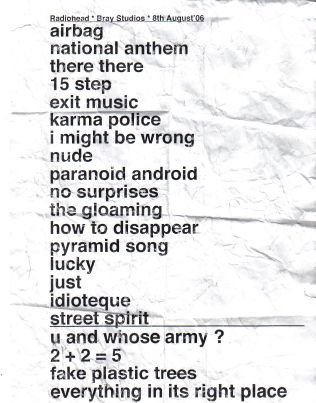
I couldn’t have dreamt up a better set list then the one that was played on Saturday night. I remember the “Kid A/Amnesiac” tour fondly. I saw the Garden State Park show in 2001. I still think highly of the albums that the tour was promoting, and of course the show leaned on them heavily. The Sziget show, however, pulled from nearly every album, as well as throwing us a couple of new songs.

I fell for this band in ’97 with “OK Computer”, and I’ll admit to having hoped that Saturday’s show would draw heavily from that album. I figured it wasn’t unrealistic, seeing as the band isn’t promoting any specific album on this tour. So when they opened with “Airbag” I felt certain that there exists a concert genie who heard and granted my wish.

I was actually walking into the festival’s main stage area when “Airbag” sounded the beginning of the show. (Mark, Charlie, and I had been awed by a little four-piece Hungarian blues combo doing Rolling Stones covers, and we waited until the last minute to get to the big show.) The stage itself was enormous, and very far away. The audience was shoulder-to-shoulder all the way out to the food vendors. Dora and I had broken away from the crowd we were with. So, as we made our way closer to the stage, Dora was texting those we hoped to meet up with. As the band started “National Anthem” we found Donnie and Agi (Dora’s co-workers). If you know the song’s bassy distorted opening guitar riff, you’ll understand what got my blood pumping. I told the group that I didn’t want to spend the entire show looking for other people. They all agreed, and we made our way to a decent vantage point off to the right of the stage. We weren’t close, but we weren’t too far either.

We didn’t need to shove our way up front because the staging and sound were phenomenal. And besides, I’m tall; if I pushed my way to center-front, I’d ruin some short person’s show. The one drawback to being on the fringes: the audience out there was composed of the less-avid fans, people happy to chat through the two new songs, “There There” and “15 Step”. This was compounded by the festival setting, because a lot of these people weren’t fans really. They were festival goers who knew it would be foolish to turn down an opportunity to see Radiohead. I liked the new songs, but I was distracted.

When “Exit Music” started, however, I kind of got lost in the tune. It is one of my favorites. It was at this point that Donnie, who didn’t really know the band, pointed out, “This music is really very beautiful.” I couldn’t have said it better myself.

They moved right into “Karma Police”, and Agi got excited because she knew that one. Dora told me that she was pleasantly surprised at how many songs she was familiar with, and I knew then that I’ve done my duty as a husband.

The show was just one good song after another. “I Might Be Wrong” followed by the new “Nude” and then “Paranoid Android” (the song that really caught me of guard in ’97 and made me listen to rock with a more discerning ear) and then there was a wonderful mellow-down with “No Surprises”. That song always makes me happy that I’ve found a woman like Dora who’s asked me to make life an adventure.

“The Gloaming” was creepy, as always, and it was also the point where the show separated the fans from the on-lookers from the music connoisseurs. The fans know and love it all. The on-lookers start looking around and thinking, “I though this was a rock band?” And for the connoisseurs, while they might not know Radiohead, it is difficult to deny the beauty of these more low-key songs. It went from “The Gloaming” into “How to Disappear Completely” and then “Pyramid Song” and “Lucky”.

For those looking to pick things up again, the band closed up the main set in an appropriate way. They reached all the way back to ’95 for “Just”. Then they jumped forward and back again with “Idioteque” and “Street Spirit”.

Well, when they left us on that note, the crowd demanded more. It was when the encore started that I realized I was at a festival, but I was listening to a full-length show. Nearly two and an half hours, and those last twenty minutes were spectacular: “You and Whose Army?”(Yorke didn’t have a lot to say politically during the show. I think with the bombing plot and the Israeli-Lebanon affair this was an appropriate call. But this song’s feeling says a lot all by itself), “2 + 2 = 5”, a real surprise with “Fake Plastic Trees” and the big close with “Everything in its Right Place”.

It will be a long time before I see a show to match this one. If you get the chance, see them on this tour.

Wednesday, August 02, 2006

Asking for help


I need to “speak” with some people who have worked for non-profits.

I’ve rediscovered my interest in volunteerism recently. As part of that I'm starting an action-research program aimed at bolstering non-profit and volunteer activity in Hungary. Some of the research will include email interviews with people who have worked for non-profits in other countries. I’m hoping some readers can help me with this. If you or someone you know has ever worked for a non-profit organization, and you/he/she would be willing to answer some questions in the near future, please leave a comment below.

Here’s details if you need ‘em:

After an informal survey, I’ve come to the conclusion that there is not a substantial volunteer/community service culture in Hungary. This is not a fault of the people here. It is the result of history, economics, politics, and culture. Nevertheless, the new-ish market economy needs a strong non-profit sector and volunteer base to make up for the services lost since communism’s rejection. This is becoming clearer as Hungary's economic problems mount.

There is, as is always the case, a gap in community needs that cannot be filled by either the private or the public sector. The problem is, the transition from socialism was so fast, that no one had time to explain the importance of non-profit groups.

I have made it my goal to help non-profits and volunteer groups fill the service gap here in Hungary. One aspect of the project involves public relations. I plan to write a short article for the English-speaking papers, hopefully to have it translated for one of the local papers. Then I will, along with the students in one of my courses, perform a larger research project comparing Hungary’s non-profit/volunteer culture to that of other, more mature market economies. I’m hoping the research shows the importance of the work done in the volunteer sector.

Thanks for you help.