If I say "the Trump Administration is lying about its support for the Dreamers," like-minded liberal friends nod and agree.
My conservative friends, however, shake their heads and tell me the media and Democrats have duped me again.
I want to build an argument here, as an exercise, showing my conservative friends why I think the Trump Administration is lying and how that belief is rooted in something more substantial than my NPR-saturated media landscape.
Here goes:
Today I read Jeff Sessions describe the Justice Department's efforts to end the DACA program. In response to an injunction from a lower court, he said the Department is "now taking the rare step of requesting direct review [...] by the Supreme Court so that this issue may be resolved quickly and fairly for all the parties involved.”
DACA is an important issue to me.
I work with Dreamers.
I teach Dreamers.
These are my friends we're talking about.
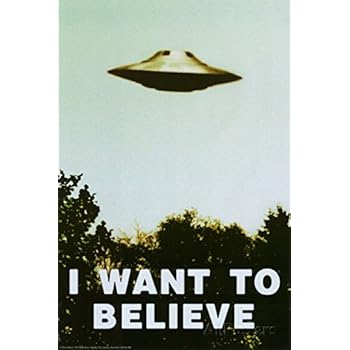
So, I want to believe the President and his supporters when they say the larger goal is to protect the Dreamers.
I want to believe they expect Congress to pass legislation that moves DACA out of the murky realm of executive orders and into federal law.
I want to believe - like Mulder-style "I want to believe."
But if that were the case, why is the Justice Department fighting so hard to end the program?
According to Sessions, the Justice Department is "now taking the rare step" of asking the Supreme Court to step in.
"The rare step," eh?
Why work outside of normal legal procedures to end the protections if the plan is for Congress to protect these people before March?
It's either...
A) The Administration expects DACA to become law, but then that "rare step" seems like a waste of time - a massive waste of effort and time.
Or it's...
B) The Administration does not want to protect the Dreamers. Then the "rare step" makes sense.
It is actions versus words, and the actions tell me the latter is the truth.
That is why I think the Administration is lying about their position on a major policy issue.
I think the Administration knows Dreamers have broad support across the country and across political parties, but the Administration also wants to deport Dreamers to countries they've never considered home. So, they are saying one thing and doing another.
There will likely be an effort to convince us that it was in the hands of Congress and they failed, but based on what I have seen this Administration do, the plan is to end DACA and never introduce protections for the Dreamers.
All that will be done behind the thin curtain of a bald-faced lie.
Examining writing, arguments, communication, education, teaching, and ways of engaging with others.
Tuesday, January 16, 2018
Friday, December 08, 2017
I don't get it.
I've been told I should not admit this:
I have trouble relating to the people who have become increasingly frustrated as a changing world has left them feeling disconnected - even abandoned by their government, the media, science, corporations, and other institutions.
I'm told that is not something a California liberal with a fancy degree should commit to text. It confirms just how out hopelessly of touch I am.
NPR, the Washington Post, J.D. Vance, the New York Times, and countless others have presented strong arguments telling me as much... and those are just the liberal outlets telling me I'm out of touch.
My conservative friends and family use my degree and zip code as a weapon whenever we debate politics. I've been told I'm out of touch by everyone.
And...
Maybe they have a point.
I've spent the last twenty-three years of my life putting personal and professional distance between myself and the people I am out of touch with. It wasn't an accident. It took a lot of work, and I did it with intention. I didn't do it, however, out of some kind of disdain or disrespect.
I did it because I was told to.
My childhood was littered with movies and songs about rust belt towns falling into ruin. I listened to nightly news reports about union jobs leaving my Midwestern home for non-union towns in the South - or other countries. I remember the stellar line up at Farm Aid '85 singing about the plight of the family farmer. The world was telling me that I could not count on a comfortable working-class life.
I listened.
Sure, I rooted for the Goonies as they tried to keep their side of town out of the hands of rich developers hellbent on building a golf course. But the message was loud and clear: Staying ahead of the changes in the country's economic landscape was going to take more than wishing on a penny.
But this isn't some "pulled myself up by the bootstraps" story. I had a lot of help.
My parents moved out of the middle class when I was in high school. They were able to send me, my sister, and my twin brothers to college during the 90s without asking us to take on any debt. My first degree landed me a job in New York City. I met good people who helped me learn and advance (I married one of them). There were bumps and bends in the road, but for the most part, I have walked the fortunate path of a global citizen allowed to seek education and opportunity wherever I can find it. I should also note that I'm a white heterosexual man, which cleared away many of the obstacles through no effort on my part. I'm grateful for the people and circumstances that helped me along the way.
I'm not looking for a pat on the back.
I'm just trying to figure out why politicians, op-eds, and think pieces are expressing shock and surprise that a person like me is out of touch with those whose life experience is so distant from my own.
Being an educated liberal doesn't give me the ability to see into the hearts of people.
I know their views are different than mine, and...
(here's the liberal part)
I do not think my view is better or more important.
When I listen to people express frustration with a changing world that has left them feeling disconnected or even abandoned, I don't dismiss them or demean them. I just...
I don't get it.
That's it. I just don't get it.
I don't understand political movements that insist the country is failing, science is lying, and the sky is falling.
Don't get me wrong. I don't think we live in some kind of utopia. I believe there is a lot we need to work on - some of which is pretty urgent - but for the most part, I trust science, non-partisan research, government programs, universities, and the media.
And sure, I am biased in their favor. I have relied heavily on those institutions to reach the achievements I have reached. And they delivered. So, yeah, it is weird to see people treat them as a kind of enemy. There is something happening there that I can't understand.
It's like when I listen to an old favorite song, "Common People" by Pulp.
I used to think I identified with the singer complaining about the rich student who wanted "to live like common people." But that's never been me. If I belong to any group described in that song, I belong to the 'tourist' group, and "everybody hates a tourist."
The song is a reminder that I can't know another person's experience. So, I shouldn't romanticize the lives of others, nor should I presume to understand what is behind the choices they make.
I have to accept that there are things I cannot know. I won't get it, and that's okay.
This doesn't mean I have to change my view. My lack of understanding doesn't make me wrong, but it doesn't make the other side wrong either.
Accepting that is crucial. If I am going to listen better, I have to know there is stuff I do not understand. It's not a character flaw. It is what happens while living in a diverse and liberal society.
I have trouble relating to the people who have become increasingly frustrated as a changing world has left them feeling disconnected - even abandoned by their government, the media, science, corporations, and other institutions.
I'm told that is not something a California liberal with a fancy degree should commit to text. It confirms just how out hopelessly of touch I am.
NPR, the Washington Post, J.D. Vance, the New York Times, and countless others have presented strong arguments telling me as much... and those are just the liberal outlets telling me I'm out of touch.
My conservative friends and family use my degree and zip code as a weapon whenever we debate politics. I've been told I'm out of touch by everyone.
And...
Maybe they have a point.
I've spent the last twenty-three years of my life putting personal and professional distance between myself and the people I am out of touch with. It wasn't an accident. It took a lot of work, and I did it with intention. I didn't do it, however, out of some kind of disdain or disrespect.
I did it because I was told to.
My childhood was littered with movies and songs about rust belt towns falling into ruin. I listened to nightly news reports about union jobs leaving my Midwestern home for non-union towns in the South - or other countries. I remember the stellar line up at Farm Aid '85 singing about the plight of the family farmer. The world was telling me that I could not count on a comfortable working-class life.
I listened.
Sure, I rooted for the Goonies as they tried to keep their side of town out of the hands of rich developers hellbent on building a golf course. But the message was loud and clear: Staying ahead of the changes in the country's economic landscape was going to take more than wishing on a penny.But this isn't some "pulled myself up by the bootstraps" story. I had a lot of help.
My parents moved out of the middle class when I was in high school. They were able to send me, my sister, and my twin brothers to college during the 90s without asking us to take on any debt. My first degree landed me a job in New York City. I met good people who helped me learn and advance (I married one of them). There were bumps and bends in the road, but for the most part, I have walked the fortunate path of a global citizen allowed to seek education and opportunity wherever I can find it. I should also note that I'm a white heterosexual man, which cleared away many of the obstacles through no effort on my part. I'm grateful for the people and circumstances that helped me along the way.
I'm not looking for a pat on the back.
I'm just trying to figure out why politicians, op-eds, and think pieces are expressing shock and surprise that a person like me is out of touch with those whose life experience is so distant from my own.
Being an educated liberal doesn't give me the ability to see into the hearts of people.
I know their views are different than mine, and...
(here's the liberal part)
I do not think my view is better or more important.
When I listen to people express frustration with a changing world that has left them feeling disconnected or even abandoned, I don't dismiss them or demean them. I just...
I don't get it.
That's it. I just don't get it.
I don't understand political movements that insist the country is failing, science is lying, and the sky is falling.
Don't get me wrong. I don't think we live in some kind of utopia. I believe there is a lot we need to work on - some of which is pretty urgent - but for the most part, I trust science, non-partisan research, government programs, universities, and the media.
And sure, I am biased in their favor. I have relied heavily on those institutions to reach the achievements I have reached. And they delivered. So, yeah, it is weird to see people treat them as a kind of enemy. There is something happening there that I can't understand.
It's like when I listen to an old favorite song, "Common People" by Pulp.
I used to think I identified with the singer complaining about the rich student who wanted "to live like common people." But that's never been me. If I belong to any group described in that song, I belong to the 'tourist' group, and "everybody hates a tourist."
The song is a reminder that I can't know another person's experience. So, I shouldn't romanticize the lives of others, nor should I presume to understand what is behind the choices they make.
I have to accept that there are things I cannot know. I won't get it, and that's okay.
This doesn't mean I have to change my view. My lack of understanding doesn't make me wrong, but it doesn't make the other side wrong either.
Accepting that is crucial. If I am going to listen better, I have to know there is stuff I do not understand. It's not a character flaw. It is what happens while living in a diverse and liberal society.
Friday, November 03, 2017
What colors the way we listen?
This opinion piece by Austin McCoy opens by noting the left's positive and enthusiastic response to last month's freestyle political rant from Eminem.
McCoy goes on to ask?
See, I've always liked the Native Tongues Collective style from the early 90s, but I had trouble connecting to so much other hip-hop - stuff like Public Enemy, NWA, Biggie, 2Pac, Mos Def, Nas. Those seemed out of reach, until recently.
The stuff I've always liked has an idealistic take on the world. It typically portrays the hardships of being black in America as obstacles that can be overcome with positivity and a recognition of the value of blackness. I liked that message. I still like that message. It is one that should be shared.
But it is an easier message for a white guy from Wisconsin to wrap his head around.
Don't get me wrong, I don't think The Jungle Brothers were asking themselves, "How can we reach the Midwestern kids playing D&D in their parents' suburban basements?"
Nevertheless, I was able to make something of a connection because the message was about pride, skill, and bravery as tools for overcoming challenges.
The tools that the Native Tongues Collective described were familiar, and that reached across a divide.
The divide, however, was something I didn't understand.
Because those tools were being used to overcome challenges I had never even considered.
For the past several years I've been hearing hip-hop differently, and McCoy's piece helped me understand why.
When Black Lives Matter came along around 2013, the group prompted me to examine how race impacts my life - like my everyday life, not just those times when race is the in-your-face issue.
I remember being shaken by the deaths of Trayvon Martin, Michael Brown, and Eric Garner.
Each case was an in-my-face example of how race shapes public safety, the perception of the police, and (as became clear in the aftermath time and time again) how we argue about these things.
But the Black Lives Matter movement asked me to consider these events more deeply.
I was aware of racial profiling. I knew it was wrong.
But I had never thought about how angry it would make me to be subjected to such treatment.
I hadn't considered what it would be like to teach my kids about how their race was going to impact what happened when they walked into a store, started at a new school, walked the streets, or asked a police officer for help.
And when I thought back to how upset I got when Martin, Brown, and Garner were killed, I realized I had never thought to myself, "That could've been me."
I knew - without thinking about it - the chances of that happening to me were reduced because I am a white guy from Wisconsin.
That is unjust in ways I had never dealt with.
And I know why I've never dealt with it. It is profoundly uncomfortable to acknowledge that I benefit from an injustice.
You rarely hear anyone celebrate a lack of justice, but you know this: Whereever there is an unjust situation, someone gained an unfair upper hand. They "won."
You'd think that person might be happy to be on the favored side of an injustice.
But I claim to value justice.
I want to believe my success was earned fairly.
So, to preserve that belief, I did not consider the challenges others face.
Now... I didn't intentionallly deny the existence of those challenges.
I just didn't think about them.
When the Black Lives Matter movement asked me to consider those challenges, however, hip-hop changed for me (so did other stuff, but focus).
Opening my eyes to those challenges helped hip-hop make more sense to me.
Descriptions of lives and lifestyles from Biggie, 2Pac, Nas and (more recently) Kendrick Lamar help me understand the challenges I have failed to consider.
The joy and anger and fear and love in the music are all put into a context I can wrap my head around; even if I can never experience that context, those artists - artists I once had trouble understanding - are now helping me see a bigger and more interesting world.
I'm better for it.
Even if I have to own some injustice, “I open my eyes and realizing I changed. Not the same deranged child stuck up in the game.”
McCoy goes on to ask?
But why did it take [...] until 2017 to afford rap music the respect [...] long given to other forms of artistic protest?
It part, it is stylistic. Eminem’s caustic tone, vulgarity and angry delivery meshes with the angry white male style of political punditry [...].
But it is also substantive. For the past 30 years, black rappers have made controversial critiques of law-and-order politics in ways that made white liberals uncomfortable.My relationship to hip-hop is different than what McCoy describes, but I still learned a lot from the read. I came to understand how my appreciation of hip-hop in the past few years is connected to my whiteness, my politics, and my life experience - all in ways I hadn't considered.
See, I've always liked the Native Tongues Collective style from the early 90s, but I had trouble connecting to so much other hip-hop - stuff like Public Enemy, NWA, Biggie, 2Pac, Mos Def, Nas. Those seemed out of reach, until recently.
The stuff I've always liked has an idealistic take on the world. It typically portrays the hardships of being black in America as obstacles that can be overcome with positivity and a recognition of the value of blackness. I liked that message. I still like that message. It is one that should be shared.
But it is an easier message for a white guy from Wisconsin to wrap his head around.
Don't get me wrong, I don't think The Jungle Brothers were asking themselves, "How can we reach the Midwestern kids playing D&D in their parents' suburban basements?"
Nevertheless, I was able to make something of a connection because the message was about pride, skill, and bravery as tools for overcoming challenges.
The tools that the Native Tongues Collective described were familiar, and that reached across a divide.
The divide, however, was something I didn't understand.
Because those tools were being used to overcome challenges I had never even considered.
For the past several years I've been hearing hip-hop differently, and McCoy's piece helped me understand why.
When Black Lives Matter came along around 2013, the group prompted me to examine how race impacts my life - like my everyday life, not just those times when race is the in-your-face issue.
I remember being shaken by the deaths of Trayvon Martin, Michael Brown, and Eric Garner.
Each case was an in-my-face example of how race shapes public safety, the perception of the police, and (as became clear in the aftermath time and time again) how we argue about these things.
But the Black Lives Matter movement asked me to consider these events more deeply.
I was aware of racial profiling. I knew it was wrong.
But I had never thought about how angry it would make me to be subjected to such treatment.
I hadn't considered what it would be like to teach my kids about how their race was going to impact what happened when they walked into a store, started at a new school, walked the streets, or asked a police officer for help.
And when I thought back to how upset I got when Martin, Brown, and Garner were killed, I realized I had never thought to myself, "That could've been me."
I knew - without thinking about it - the chances of that happening to me were reduced because I am a white guy from Wisconsin.
That is unjust in ways I had never dealt with.
And I know why I've never dealt with it. It is profoundly uncomfortable to acknowledge that I benefit from an injustice.
You rarely hear anyone celebrate a lack of justice, but you know this: Whereever there is an unjust situation, someone gained an unfair upper hand. They "won."
You'd think that person might be happy to be on the favored side of an injustice.
But I claim to value justice.
I want to believe my success was earned fairly.
So, to preserve that belief, I did not consider the challenges others face.
Now... I didn't intentionallly deny the existence of those challenges.
I just didn't think about them.
When the Black Lives Matter movement asked me to consider those challenges, however, hip-hop changed for me (so did other stuff, but focus).
Opening my eyes to those challenges helped hip-hop make more sense to me.
Descriptions of lives and lifestyles from Biggie, 2Pac, Nas and (more recently) Kendrick Lamar help me understand the challenges I have failed to consider.
The joy and anger and fear and love in the music are all put into a context I can wrap my head around; even if I can never experience that context, those artists - artists I once had trouble understanding - are now helping me see a bigger and more interesting world.
I'm better for it.
Even if I have to own some injustice, “I open my eyes and realizing I changed. Not the same deranged child stuck up in the game.”
Sunday, August 13, 2017
No excuse for silence
Last year I asked Trump voters if they supported the appointment of Steve Bannon.
I argued that supporting his appointment showed support for the White Nationalist movement and the philosophy of White Supremacy.
The evidence for my argument was pulled from well-known White Nationalist websites.
Prominent leaders of the White Nationalist movement spoke out, celebrating Bannon's appointment and the promise of an administration that supported their agenda.
All of that was held before our eyes. The writing was on the wall.
We cannot act surprised when we see the violent results of a tacit acceptance of White Nationalists and other white power hate groups.
I asked my conservative relatives and friends to renounce this ugly side of right-wing populism.
They reacted by dismissing the size of the movement, by accusing me of tarring the President with the same brush as the extremists, by suggesting I was exaggerating the threat.
They asked me to wait and see.
Today, I ask them to find an excuse for the violence and murder that their silence permitted.
I cannot excuse the silence.
I argued that supporting his appointment showed support for the White Nationalist movement and the philosophy of White Supremacy.
The evidence for my argument was pulled from well-known White Nationalist websites.Prominent leaders of the White Nationalist movement spoke out, celebrating Bannon's appointment and the promise of an administration that supported their agenda.
All of that was held before our eyes. The writing was on the wall.
We cannot act surprised when we see the violent results of a tacit acceptance of White Nationalists and other white power hate groups.
I asked my conservative relatives and friends to renounce this ugly side of right-wing populism.
They reacted by dismissing the size of the movement, by accusing me of tarring the President with the same brush as the extremists, by suggesting I was exaggerating the threat.
They asked me to wait and see.
Today, I ask them to find an excuse for the violence and murder that their silence permitted.
I cannot excuse the silence.
Wednesday, July 26, 2017
Not a Game
A good argument is not a game.
I've heard people say things like, "She won that argument big league!"
This is just one example of how the language around debate can make arguments seem like competitive matches.
But there is an essential characteristic games have and good arguments lack.
Games have clearly defined conclusions.
Baseball has innings.
Soccer has the clock.
Track has a finish line.
If you are having a good argument, there is not a definitive end point.
What is the best way to teach writing?
What tax policy will best benefit the middle class?
What scientific instrument will tell us the most about exoplanets?
How has America's history impacted racial minorities?
We don't get to finish those arguments.
They are good because every answer requires (get ready for it) an argument
And every argument can be questioned.
Sure, you can have a silly argument.
Or you can have a pointless argument like, "When was Chuck Mangione's 'Feels So Good' released."
The banter might even feel so good that it could, for a time, be mistaken for a real argument, until someone pulls out their phone and settles the dispute.
Good arguments remain unsettled.
They are unsettling.
Most remain unresolved.
On the rare occasion when a good argument does get resolved, the world is changed.
What is the shape and nature of DNA?
Is slavery a moral practice?
Can you compel a person to believe in a specific god?
How do species of plants and animals emerge?
And while each of these arguments were clearly settled, none of them had a clearly defined conclusion. You can still find people who will contend that one or all of these debates still rage on.
But the arguments and their resolutions have already changed the world.
All of this to say, if you get into an argument with the goal of winning, you're doing it wrong.
Good arguments are not won.
Good arguments are resolved over the course of generations.
Don't join an argument to win, join to change the world.
They are unsettling.
Most remain unresolved.
On the rare occasion when a good argument does get resolved, the world is changed.
What is the shape and nature of DNA?
Is slavery a moral practice?
Can you compel a person to believe in a specific god?
How do species of plants and animals emerge?
And while each of these arguments were clearly settled, none of them had a clearly defined conclusion. You can still find people who will contend that one or all of these debates still rage on.
But the arguments and their resolutions have already changed the world.
All of this to say, if you get into an argument with the goal of winning, you're doing it wrong.
Good arguments are not won.
Good arguments are resolved over the course of generations.
Don't join an argument to win, join to change the world.
Monday, May 08, 2017
Tuesday, April 04, 2017
Why #IStandWithCEU
We moved to Budapest in 2004.My wife Dora enrolled in the MBA Program at Central European University.
The University plugged her into a network of people who lived, worked, and thrived in a world where borders do not restrict.
In seminars, peers from around the globe considered how to communicate across cultures, how to negotiate with someone who holds different values, and how to work towards a future where differences don't divide us.
Dora went on to join an international team of professionals who advised businesses seeking to develop opportunities in new markets like Eastern Europe, the Middle East, and North Africa.
Those years taught us to tear down walls and seek out ways to work with others.
Those years were about seeing our differences as assets - as conversation starters.
The unfamiliar was an invitation.
"So, wait... You celebrate Christmas in January? Who brings the presents?"
"No. I don't know anything about Zoroastrianism. What is it?"
"Look, you're going to have to explain the regions of India to me."
A few years after Dora graduated from CEU, I joined the University as a member of the faculty. I worked with students from Romania, Nigeria, Georgia, Russia, Kazakhstan, Germany, and the list goes on. I developed a composition course that focused on communication across cultures.
It was at CEU that I began to understand the potential political and ethical implications of teaching students to write in English.
While at CEU, I realized the extent to which stepping into the unfamiliar can change a person. It sent me back to school to study people joining professional and scholarly communities.
Hungarian politicians passed a bill aimed at shutting CEU down.
Dora and I are profoundly disappointed.
The people attacking CEU are cowards.
They are afraid of the challenges presented by a changing world.
They think they can stop those changes by building fences and walls, by stifling inquiry, and by attacking critics.
The cowards are having a moment right now.
They convinced a lot of people to fear the unfamiliar.
But I am not afraid.
Dora's not afraid.
The cowards' moment will pass.
Wednesday, March 22, 2017
Nesting Dolls and Invisible Work
Much of what I've been writing about this year is linked to how we argue with people who can't agree on what is known.
Over in philosophy, they'd say I'm focused on conflicts of epistemology.
I didn't realize a theme was developing, but when I look at many of the arguments in the public discourse today, these kinds of conflicts have clearly created an "issue of the moment."
Part of what is going on is simple. We all see the world through our lenses, and new information is sorted into categories that match our worldview.
This aspect of the issue explains a wonderful new addition to the stack of nesting dolls that is Philip K. Dick's "Man in the High Castle."
Dick wrote a novel set in an alternate history where the fascists win WWII and take over America, but it's PKD, so of course there's a mind-bending twist:
In that alternate universe, there's another author who created another alternate universe in which the Allies won and then turned on each other.
The idea is that readers have to navigate meaning across three realities, ours, the book's, and that of the book within the book.
More recently, a tv series based on Dick's book has been made, and as a promo, the marketing team set up an online "resistance radio station" set in the alternate United States where fascists rule. Here's the next nesting doll: Many Trump supporters assumed the radio station was a real protest of the real president.
It's easy to make fun, but without the dizzying context of Dick's fiction, a resistance radio station does feel pretty explicitly anti-Trump. Not to mention, the show itself is being viewed by many critics and commentators as anti-Trump. So, I'm not sure we should be making fun.
And that's just one example of how not knowing a single piece of the larger puzzle makes navigating today's public discourse a new kind of challenge. I think the Tom Nicols got a lot right in his essay published in Foreign Affairs.
Beyond the rejection of expertise for the reasons Nicols describes, I believe there is something else going on as well.
It's a manifestation of a certain lack of empathy.
A lot of people work hard to get to where they are in life. Some of those same people, however, are reluctant to believe others have worked hard enough to be respected as experts. Now that technology has granted everyone the ability to "do our own research," it's easier to dismiss the work required to actually become an expert.
Reading papers written by economists is a good practice if you want to be informed. It does not, however, grant a person the ability to create statistical models that predict how certain incentives will impact human behavior (one of the things economists can do that most people cannot). It takes years of hard work for aspiring economists to get to a place where they can perform as an expert economist. Those years of hard work happen in classrooms, offices, conferences, and other settings most of us would find boring. This makes the work of becoming an expert invisible.
Athletes have to deal with a similar issue. Most of the work that makes professional athletes so good at what they do is hidden from the fans.
But at least athletes have fans.
Economists, small business owners, cognitive psychologists, restaurant managers, linguists, plumbers, and biologists rarely earn acclaim from outside of their disciplines. Sure, they might have clients or students who value their work, but those relationships are more complex than fandom.
If a person claims to be an authority, then we have every right to ask them, "Who gave you that authority?"
With legitimate experts, the answer is usually some version of, "I have been working in the area for 15 (or more) years and have earned several honors."
Unfortunately, too many people are too quick to dismiss those years of hard work.
Over in philosophy, they'd say I'm focused on conflicts of epistemology.
I didn't realize a theme was developing, but when I look at many of the arguments in the public discourse today, these kinds of conflicts have clearly created an "issue of the moment."
Part of what is going on is simple. We all see the world through our lenses, and new information is sorted into categories that match our worldview.
This aspect of the issue explains a wonderful new addition to the stack of nesting dolls that is Philip K. Dick's "Man in the High Castle."Dick wrote a novel set in an alternate history where the fascists win WWII and take over America, but it's PKD, so of course there's a mind-bending twist:
In that alternate universe, there's another author who created another alternate universe in which the Allies won and then turned on each other.
The idea is that readers have to navigate meaning across three realities, ours, the book's, and that of the book within the book.
More recently, a tv series based on Dick's book has been made, and as a promo, the marketing team set up an online "resistance radio station" set in the alternate United States where fascists rule. Here's the next nesting doll: Many Trump supporters assumed the radio station was a real protest of the real president.
It's easy to make fun, but without the dizzying context of Dick's fiction, a resistance radio station does feel pretty explicitly anti-Trump. Not to mention, the show itself is being viewed by many critics and commentators as anti-Trump. So, I'm not sure we should be making fun.
And that's just one example of how not knowing a single piece of the larger puzzle makes navigating today's public discourse a new kind of challenge. I think the Tom Nicols got a lot right in his essay published in Foreign Affairs.
It’s not just that people don’t know a lot about science or politics or geography. They don’t, but that’s an old problem. The bigger concern today is that Americans have reached a point where ignorance—at least regarding what is generally considered established knowledge in public policy—is seen as an actual virtue. To reject the advice of experts is to assert autonomy, a way for Americans to demonstrate their independence from nefarious elites—and insulate their increasingly fragile egos from ever being told they’re wrong.I've tried to say something similar here, but Nicols composed a much stronger argument for the point.
Beyond the rejection of expertise for the reasons Nicols describes, I believe there is something else going on as well.
It's a manifestation of a certain lack of empathy.
A lot of people work hard to get to where they are in life. Some of those same people, however, are reluctant to believe others have worked hard enough to be respected as experts. Now that technology has granted everyone the ability to "do our own research," it's easier to dismiss the work required to actually become an expert.
Reading papers written by economists is a good practice if you want to be informed. It does not, however, grant a person the ability to create statistical models that predict how certain incentives will impact human behavior (one of the things economists can do that most people cannot). It takes years of hard work for aspiring economists to get to a place where they can perform as an expert economist. Those years of hard work happen in classrooms, offices, conferences, and other settings most of us would find boring. This makes the work of becoming an expert invisible.
Athletes have to deal with a similar issue. Most of the work that makes professional athletes so good at what they do is hidden from the fans.
But at least athletes have fans.
Economists, small business owners, cognitive psychologists, restaurant managers, linguists, plumbers, and biologists rarely earn acclaim from outside of their disciplines. Sure, they might have clients or students who value their work, but those relationships are more complex than fandom.
If a person claims to be an authority, then we have every right to ask them, "Who gave you that authority?"
With legitimate experts, the answer is usually some version of, "I have been working in the area for 15 (or more) years and have earned several honors."
Unfortunately, too many people are too quick to dismiss those years of hard work.
Subscribe to:
Posts (Atom)