Pages

Wednesday, January 24, 2007

The Warmer Winds of Change


I’m not too concerned about where people stand on climate change. We’re at a point where people agree that’s it’s happening, but for some there is debate on the role humans play.

Fine.

Then let’s define the debate this way:

One side says we have to cut our burning of fossil fuels to stem climate change. This side includes the chief executives of 10 major corporations (citation from FOX News), a UN panel of 2,500 scientists (citation from Reuters), and the more than 160 nations that have ratified or at least accepted the Kyoto Protocol (see list).

The other side says the jury is still out on the role humans play in climate change. The science of climate analysis is anything but precise, and there have been countless shifts in the climate over Earth’s long history. There are scientists out there with evidence that shows how these and other ideas disprove the claims of environmentalists worried about climate change (look at this scientific looking website).

To some, the latter camp is populated by crackpots and schemers. To others, the former camp is composed of alarmists and conspirators. No matter where you situate yourself, the topic is hot. It is on the public’s mind, and I was wondering about the role it would play in the speeches last night.

Despite nearly overwhelming public concern on the issue, President Bush didn’t make much of climate change in his State of the Union Address, apparently siding himself with the latter camp. Indeed he is a hero to those who claim the concerns over climate change are exaggerated, as he is one of the only leaders from a developed nation to reject the Kyoto Protocol. (I will accept that this decision may be influenced more by the President’s belief in corporate freedom than his denial of the overwhelming scientific evidence. And now don’t take this to mean I’m happy with those who signed on to Kyoto. Europe can’t figure out how to meet the standards, making the whole protocol next-to-meaningless.)

Nevertheless, something in the speech did touch on the issue. The President would like America to become less dependent on foreign oil. While one of the methods he suggested in the address was an increase in domestic production, the President did acknowledge that the US needs to find ways to consume less. Sure, there's ethanol and renewable sources, but even W knows we have do go on a diet. He didn't tell us how to cut down, however. I'm not sure he wants to go into those kinds of details.

He did get me thinking, however.

It is transportation, specifically air and auto transit, that accounts for the vast majority of the world's consumption of oil. Europe can’t figure out how to deal with the issue, and America’s size combined with our love affair with the automobile makes us just as hopeless. But if we had to cut transit consumption, how could we do it?

My answer is trains.

Here’s my thinking. I hate traveling by plane, and I don’t care for driving. I love trains. Can’t say why, but I think trains are great. The rise of short-haul airlines has ruined the train industry here in Europe. It also has led to a spike in airline emissions. Commuter rails in Central and Eastern Europe are dying off because people can afford cars now. The result has been a hike in ticket prices. My thinking is countries need to do the opposite.

Developed nations need to invest in suburban and commuter rail lines. They need to make rail more comfortable and competitive. Trains should be made significantly cheaper than air travel. The cost of gas, tolls, and time should be comparable to the cost of a monthly train pass. There should be internet access and a gym-car on commuter lines. The cafes shouldn’t price gouge. And yes, I think this should all be made possible with tax dollars.

My question for readers is this: am I letting my love of trains cloud my judgment, or does this sound like part of a solution?

Tuesday, January 23, 2007

Art Here and There


Not too long ago, I saw a play here in Budapest. The show was in Hungarian. It was an adaptation of the Danish film, The Celebration. Going in, I was unsure if I would be able to enjoy the show, considering my very limited Hungarian. I was pleasantly surprised though. Aside from a few monologues that I needed Dora to explain, overall the play came together for me. The show was stunningly powerful, but that’s not what I want to address here.

It was a Tuesday night in a city of just two over million people (about the size of Houston). The show was a challenging piece about an upper-class family confronting the father’s history of sexually and mentally abusing his children. The theater was packed. There were chairs set up in the aisle for overflow, and all of those chairs held audience members. Not everybody loved the show. The shocking conclusion was a bit too much for Andras, but he and I still managed to have a nice talk about the effect the scene had on the show as a whole.

A few days later Dora, Andras, Agnes, and I visited the National Museum for a retrospective on Hungarian painters. The exhibit was impressive, but once again, what struck me was the amount of visitors. We waited in line for tickets, and once inside, every room was full of museum goers. Meanwhile, across town there was a Van Gogh exhibit that had shoulder-to-shoulder crowds no matter the time of day you visited.

The Opera is always full – or close to it. The city has a new national theater with an auditorium, an orchestra hall and a studio space. What I’m getting at here is Budapest’s fine arts are thriving in a way that surprises me. I’m not surprised that the people here are art lovers; I’m surprised at how much fine art such a small nation can support.

It is particularly impressive when you consider how new the concepts of philanthropy and patronage are in post-Soviet Hungary. Seventeen years after the regime change, and people are still weary about “giving to the community.” The retrospective at the National Museum was filled with paintings on loan from the collection of a man named Kovács Gábor. The Hungarians at the exhibit kept commenting about that, like it was odd that a man would lend his paintings to a museum just like that.

So, how do the Hungarians do it? Well, I think the answer is a lot of government funding, which may be at risk. The economy is not exactly tip-top right now, and painful budget cuts are already being made. The interesting thing so far has been the way cuts have been implemented. Aside from healthcare, no one area has been targeted. Most cuts have been across the board. This raises howls from everybody, because everybody losses a little, and they’d rather lose nothing at all. However, what I’m used to as an American is targeted cuts – schools losing their music programs, museums losing funding, and grants being reduced.

I can’t be sure, but I think it says something about the difference in the way Hungarians and Americans see the fine arts. The Hungarian middle class can, and does attend theater events, largely because the state keeps tickets affordable. Young families are able to take their kids to the Opera. The Hungarians seem to understand fine art as something that belongs to all Hungarians. Whereas Americans deem fine art as something the wealthy allow the middle class to enjoy. I’m not saying the US system doesn’t work. There are many generous people who fund the arts in the States, but the system does have its drawbacks. Especially when you consider labor-intensive art forms – like ballet, musicals, theater, cinema, and so on – these productions have to become businesses even when they do enjoy patronage. Broadway’s new method of scaling the house is a sign of this.

The result of business-minded art not only prices out some of the middle class, it also discourages producers from taking on projects that push the threshold of their respective arts forms. I can’t help but wonder how Stephen Sondheim’s work would fair on today’s Broadway of “Mary Poppins” and “Legally Blonde.” And it’s already been made clear that edgy dramas like “The Celebration” don’t stand much of a chance. That show ran for just two-weeks on Broadway before they had to strike the set. If the outrageous rent on the theaters were subsidized, and the savings were passed on to the public I think we’d see American writers and composers producing more ambitious and interesting work.

Tuesday, January 16, 2007

Losing my head


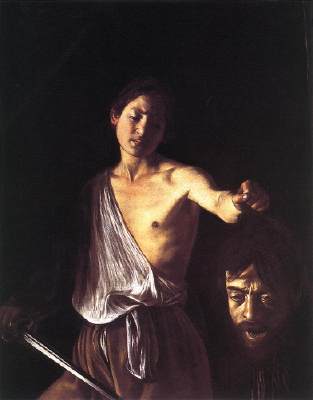
“The decapitation appeared inadvertent…”

Why are those words strung together in my morning news?

That’s it. I’m done being reasonable about this thing. I’m through with weighing the historical context, considering regional stability, giving credence to claims that the UN sanctions were failing, and hoping for a blossoming democracy. I tried. I did. I know smart people who supported this thing. I can name intelligent individuals who argued convincingly in the name of this war. And while I always made my opposition clear, I did my damnedest to listen to those people. I weighed what they had to say, and for a time I even allowed some of my views to sway closer to the center. “Yes, sure, I will concede that a strong ally in the region would be in US interests.” “When you put it that way, I can see how a small force could be considered a tactical advantage.”

But I was never convinced, and now…

“The decapitation appeared inadvertent…”? Say what you will about the death penalty (a barbaric remnant of a time when governance meant vengeance was in the public interest), but most people would be hard pressed to defend an accidental beheading during an execution.

Oops, I dinged your car door.

Sorry, I spilled some wine on the rug.

Those actions can be described as accidental, but when a living person’s head is pulled from their body, inadvertent or not, primitive and thoughtless forces were at play. There are plenty of beheadings in history. The Bible chronicles some of the best, but none of them are followed by, “Oh, my bad.”

So we ousted a brutal dictator, and these are the people we put in his place. Great goddamned job, Georgie. Brav-fucking-o. Yeah, that’s right; I’m giving up my civil, restrained, non-vulgar voice on this issue. Screw that. I will no longer abide the war-supporters' insistence on levelheaded discourse (levelheaded, ha, didn’t even mean for that to slip out). We’ve blown the goat on this one, ladies and gentlemen. It’s officially fuck-all, and those who disagree can suck my fucking cock.

Wednesday, December 20, 2006

Drugs over here and over there


So I just listened to an NPR report on organized crime’s move into the marijuana industry. The report said the drug generates $35 billion annually in the US, making it the nation’s number one cash crop. The story went on to detail federal busts in suburban California communities, and illustrated with little room for argument how those busts point to organized crime. Before I get to comparing the US’s view of marijuana to Hungary’s view of the drug, I want to say something more general.

I don’t like organized crime. I think people who make a living off the black market do harm to the rest of us. This is a view I didn’t have when I lived in the States, but since moving to Hungary where the black market is doing visible harm to honest people who work harder then they should considering the wages they make, I’ve come to view organized criminals as weak-minded parasites. If there are two things I have grown disdainful of, they are organized crime and corruption. The two often go hand in hand, but right now I’m mostly concerned with the dickless goons who think they’ve beat the system because they control the liquor market, the casinos, the high-end dance clubs, and the strip clubs without paying a penny in taxes. Sounds like a sweet gig, but they’re dragging down the rest of the country. There are a few people who see the damage being done, but whether it is through threats of violence or through their connections to corrupt officials, the small-minded goons in charge of the whole system have secured their strangle-hold and won’t be happy until Hungary has no more money left to steal.

That said, I think it would be in America’s best interest to keep the marijuana market out of the hands of organized criminals. And considering the country’s understanding/acceptance of the drug, I think the only way to do that is decriminalization. The NPR report features a police officer pointing out that the busts being made did not involve the hobby home growers or the groovy gardeners. These bust involved criminal rings looking to cash in on a widely accepted, yet illegal commodity. The criminals in California are taking advantage of the drug’s status as a risky investment. The state of California has all but agreed to look the other way, but the Federal government is riding around on their high horse and kicking in pot-growers doors. The small-time growers can’t afford the risk anymore, but the demand persists. Who will supply the market? Well, it will be people who can afford to invest in an operation that uses economy of scale to make up for the occasional loss. It will be people who can hire someone willing to go to jail for a while. It will be people accustomed to flagrantly breaking the law. The Federal government is all but handing them the market.

Marijuana is easy to grow. It is called weed for a reason. It should be dirt cheap. Even the good stuff can be grown on a small scale with minimal investment. If growing a plant or two for personal use means jail time, however, the value goes up and the criminals move into the market. So, attempting to control the supply with harsh law enforcement not only fails to achieve its goal, it fills the pockets of the worst kinds of people.

So, can America do anything about the demand side of the equation? In short, the answer is no. I’m over here in Hungary where the Soviets did a bang up job brainwashing the population. If you ask anyone over forty about marijuana, they will tell you that the stuff will kill you, give you herpes, make you impotent, and put a curse on your family line for generations to come. Of course that same person will also tell you that being gay is a disease you can catch by watching too much Western television (someone actually told me that). America, while it doesn’t say nice things about the drug, does allow a healthy exchange of ideas to take place among its citizens. If you like pot, you don’t feel bad telling your best friend about it. When the Soviets were here in Hungary, however, even if you thought marijuana was harmless, hell if you were going to tell your friend at work. He’d get a promotion for reporting you. In the States we don’t have that kind of paranoia to deal with, and over time people have come to realize that pot isn’t all that bad. Sure there are a number of drawbacks, but overall the harm is nowhere near that of harder drugs. It has gotten to a point where people are okay with marijuana. They don’t want to see it sold in gas stations, but if someone keeps a little wooden box stocked with rolling papers and an ounce or two, no harm no foul. Without an expensive public “education” campaign aimed at un-learning America’s three to four decades of experience with the dreaded marijuana, there seems to be few choices other than decriminalization. And so my question to you, dear reader, is: Does that sound like, totally, really like the most awesome plan ever, or am I just soooo stoned?

Wednesday, December 13, 2006

Dog debate

The correct word order, I finally decide, would be canine menstrual blood not menstrual canine blood, but since it’s come up, let me take this opportunity to say that this is a defining moment for me in that I never could have predicted my life taking a path that would lead to a debate over the proper adjective order necessary to describe the rust-colored stain left on the day bed by my young dog Szóda. It would be trite to point out that my move from Midwestern America to Central Europe came as a surprise to even myself. Perhaps equally so to say that I never saw teaching English rhetoric to Hungarians as a source of income I would one day tap. What makes this moment poignant, however - what highlights the disparity between what I am and what I was before my arrival in Hungary, is a memory of the famed host of “The Price is Right”, the peerless Bob Barker. For those in the know, you’ll remember the public service announcement Mr. Barker made as “The Price is Right” came to a close. The credits would start rolling. The family and friends of the Showcase Showdown winner would be storming the stage. The Barbie doll presenters would be comforting the contestant who came in second place, and then Bob would say it: “Remember folks, help to control the pet population. Spay and neuter your pets.” For those of you who didn’t know, this was how a very popular American game show would come to a close nearly everyday at 11:00am Central Standard Time.

Bob Barker had me convinced that, if you had a dog or cat, the humane thing to do was to take away its ability to procreate. I accepted his word as gospel. Why would that man lie to America?

Well, I realize he wasn’t lying. He was simply using the soapbox he’d helped to construct in an effort to convey a message he believed in. The man believes the pet population is out of control, and spay/neuter clinics are the answer to that problem.

Now that I live in Hungary, however, I’ve come to question Bob’s belief. Most people here do not clip off their pets’ reproductive organs. It is simply not common practice. Throughout the year I meet many dog-walkers in the street who ask me if Szóda is a girl or a boy. Some are worried about two boy dogs getting into a fight, but many are worried because their female dog is in heat. You don’t want to allow a male dog’s nose too close to a menstruating female’s behind. Just trust me on that.

I will admit, getting Szóda fixed would make things a bit easier. I can’t let her run around willy-nilly when she’s in heat, not unless I want puppies. Beyond that, however, there isn’t much of an issue. It’s not as messy as you might think. In fact it's not messy at all. And there is no stray dog problem in Hungary, at least not as far as I can see. I’ve lived in the city and in the countryside, and I have yet to see more than one or two strays. So I am left with a question: do I take Bob Barker’s advice or do I allow Szóda to keep her ability to reproduce? Let me know what you think.

Monday, December 11, 2006

The passing of a legend


Just something brief today, something about the passing of a football legend. Ferenc Puskas was a Hungarian footballer (soccer player) who won the respect of every football fan in the world during his career. I have to admit, I didn’t know who he was before coming to Hungary. And I certainly didn’t realize his status as a national hero until he passed away. There was a national day of mourning; we’re talking black flags hung in the capitol and praise from the Prime Minister.

Now, if you understand the game and have a look at the man’s record, there’s good reason for Hungary’s adoration of Puskas. He earned his status as a legend. It’s not just the Hungarians who feel that way, as he also played with Real Madrid after defecting in ’56, a move that did not please the communists whatsoever. They branded him a traitor. Of course, Hungarians welcomed Puskas and his family back in the 80’s, showing that there are a few things more powerful then politics in this country.

So why, if I didn’t know much about the man, did I choose to write about him today? Well, it seems to me that nearly the entire world pays close attention to this game football (soccer). The passing of great players is marked by days of mourning. The issues of the Cold War are put to one side for one footballer’s desire to return to his homeland. It’s astounding how much people care about the game. And while I don’t doubt Americans have the same devotion to the sports we follow, I’m still left wondering why we don’t show much interest in this game. I’ve read a lot of theories: the rhythm of the game doesn’t jive with Americans (then how can one explain a love of both basketball and baseball?), there are too many American sports already (What? Maybe 3.5 with football, baseball, basketball, and the non-Canadian half of hockey), or a lack of talent (but with a population around 300 million and more money than… anybody else, that excuse falls short).

I think, however, that the most interesting reason behind it might be the real one. I don’t think America wants to compete on the world stage in a team sporting event. Aside from the team events at the Olympics and in track and field, we don’t like to play with others. And let’s face it, without a cold war, the Olympics and track and field are not exactly big draws anymore.

So what do you say about a country that doesn’t play well with others? I don’t know, but I thought I’d pose the question.

Friday, December 01, 2006

Like a rolling stone


I was writing to John Burns, an old friend, today. I was excusing my failed e-life: no person emails in months, no blog entries, no messenger... nothing. But in responce to his question about Hungarian politics, I just couldn't stop writing. Here's some of that message.

And as far as Hungarian politics is concerned... Wow, it's a lot to explain. The protests and the ensuing riots are filled with a couple hundred years of issues: loss of territory after WWI, anti-Semitism, communism vs socialism, xenophobia, police brutality, police incompetence, failed revolutions in 1848 and 1956, and more.

It's so hard for us as Americans to comprehend, the people here consider their whole history political. I've been here a while, and I'm still trying to wrap my head around all of it. Imagine an American politician invoking his party’s triumphs during the Civil War. It wouldn't happen outside a strictly academic conversation.

As a people, we Americans favor issues over context. I see it as both a blessing and a curse. I'm over here, however, and learning that most people in the world think the tendency makes Americans look stupid. Yet they acknowledge that we’re productive. They fail to understand the mechanism behind it, because divorcing themselves from their history is such an impossible concept.

Sounds like a good thing, right. But when there's been a peaceful change in regime and the nation is expected to move at the pace of the world economy, there’s a need for people to step back and look at the now – even if only for a couple of years. The Hungarians want a free-market economy, but they want to blame the government for any and all problems. They want the lower taxes of a full-fledged capitalist economy without losing the benefits that came with socialism. So the amateur politicians over here lie to the public while pushing through legislation aimed at one side or the other.

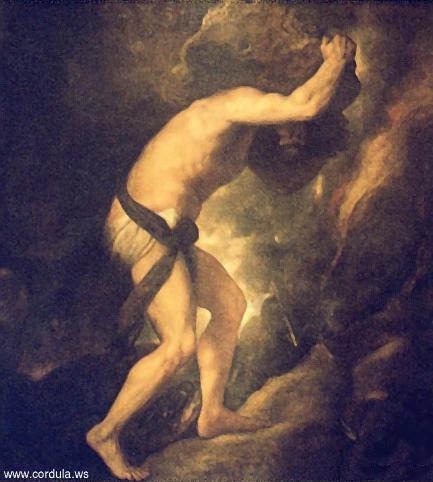
It’s a Sisyphean task if there ever was one. And in a moderately poor country full of people who enjoy revolutions, when the rock rolls back downhill… well you saw the news.

Sunday, November 05, 2006

Back for the fall


Autumn has come and nearly gone here in Hungary. There has been a flurry of events to accompany it. Unfortunately this flurry knocked me out of the blogging loop for a bit, but I’m back… with a lot to say.

I should start with the announcement of my sister’s new baby. Thomas Earl Lutz was born on the 23rd of October, 2006. Congratulations to Courtney and Terry. I’m happy to have a nephew – my first. I hope he’s a trouble-maker.

Speaking of Thomas Earl, I was in an interesting place when I got the news of his arrival. My nephew was born on the 50th anniversary of Hungary’s revolution against the Soviets, and when I got the call telling me of his birth I was in a café trying to avoid the right-wing rioters out ravaging the streets of Budapest . Odd, you might think, that members of Hungary’s political right would choose to celebrate the anniversary of such a momentous event with eruptions of violence and anti-government themed protests. Odd because the Hungarian right is traditionally tied to themes of nationalism and to the proud history of Hungary. One would assume that such a party would attempt to ring in this anniversary with all the pomp and ceremony of an independence celebration.

It would seem ridiculous to politicize this event, this event that recognizes a time when Hungarians found one voice – despite the many disparate ideals in this country – one voice that railed against the Soviet Empire strongly enough to drive the occupying troops of the Russian army, the largest standing army of the day, out of Hungary entirely. Students, workers, the military, and even several politicians all came together to stand up against the Soviet occupation, and for a short time they were triumphant.

The brutal Russian retaliation that followed served as a wake-up call to Communist thinkers in the west. People saw the unpleasantness that Moscow had, until that point, kept hidden for the most part behind the Iron Curtain. The 56 Revolution and its aftermath is often considered as one of the first major dents in the Soviet façade, and is thought by many to be a major factor in what led to the eventual collapse of Soviet rule.

I had been looking forward to being here for Hungary’s celebration of the event, but when political events took an ugly turn last month I knew the event would be tainted. (For those out of the loop, the leader of the ruling socialist party was caught on tape admitting to lies, lies that likely got him re-elected. Since then, the opposition has been protesting and calling for the Prime Minister’s resignation.) I couldn’t have predicted, however, just how tainted the anniversary’s celebration would be.

The party representing the right organized a commemorative event at the intersection of the two busiest roads in the downtown area. The metro stop at that location is called Astoria, after a hotel at the intersection. People call the intersection by the same name (great PR for the hotel). Those familiar with my life here in Budapest may recognize the location as the metro stop just outside Lili’s apartment.

Dora and I picked up Lili after she finished work. We’d received a lot of phone calls urging us to keep Lili away from Astoria. For one thing, most of Dora’s family didn’t want us adding our number to the crowd, and thereby showing a kind of support for their cause. For another thing, there was fear of violence at the event.

Of course we headed straight for Astoria.

I suppose it was the large presence of skinheads that surprised me most. I have been engaged in an ongoing debate with a fellow teacher at McDaniel. He supports the right, and when I said the party needs to marginalize radical elements (like skinheads), he got upset and told me the party wanted nothing to do with such people. He even went so far as to suggest that the socialists were the ones responsible for sending such hooligans to events sponsored by the right. When we arrived at the commemoration, however, the skinheads were mingling with other people and seemed to fit in just fine.

Now I don’t want people to think the right in Hungary is a bunch of skinheads. That’s not true at all. Families were present, old people, young businessmen, the working class, and more – all there in support of their party. The skinheads were only a fraction of the crowd, but they were there - the loud minority. Now, I do understand that they are a minority, but the party does little, if anything, to discourage their antics. In fact, the speech given by Victor Orban, the party’s charismatic leader, inspired the more radical elements to violence. He opened with some pleasantries, a few words about the anniversary, but then he turned his focus to the political events of the day. He pointed his finger at the ruling socialist party and all but sanctioned the ensuing riots.

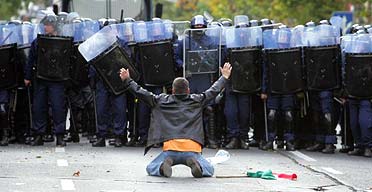
They attempted a march to the Parliament where a government sanctioned commemoration was taking place, but the police pushed them back to Astoria. This contained the violence, but it did not stem it. The clashes with police lasted well into the night. Tear gas and rubber bullets.

So, I was disappointed, once again, by politics making their way into an event that shouldn’t be politicized. The events of 50 years ago represented a lashing out against the Soviets, not against the socialists. In fact, many of the leaders of the revolution were striving to form an independent communist state, like Tito’s Yugoslavia. They actually were socialists. They just weren't Soviets.

The right here in Hungary has distorted that history, however, and attempted to use the anniversary in their efforts to oust the democratically elected (albeit under false pretences) socialist party. I hate to see something like this used for political gain. It’s a similar feeling I have about the democrats in the States politicizing the Iraqi war’s decline in popularity, or the Republican’s ongoing efforts to politicize 9/11. It is hard to see history trivialized in such a manner. It is hard to stand by as pundits and politicians use the blood of other people to further their causes.

Still, in the hyper-analyzed world we live in, no one seems to be asking the questions that matter to me. Like, “Isn’t our history and our heritage more important than the price of oil?”

Well, isn’t it?